What Is a Section 408 Permission?
Section 408 (33 U.S.C. § 408) is permission to alter or occupy a Corps civil works project — levees, federal channels, and similar. It is separate from 404 and Section 10.

Section 408 (33 U.S.C. § 408) is permission to alter or occupy a Corps civil works project — levees, federal channels, and similar. It is separate from 404 and Section 10.
Stream mitigation replaces authorized 404 impacts to streams with credits or permittee-responsible work. Wetland credits do not automatically clear a stream debit.
RCRA is the federal cradle-to-grave hazardous waste law. How it differs from CERCLA, and how it shows up next to Phase I/II site work in the Southeast.
A CatEx is the NEPA path for federal actions that fit an agency’s listed category and clear extraordinary circumstances. It is not a free pass past 404, ESA, or state permits.
One comprehensive private-client overview of Section 401 WQC, coastal consistency, CUP, ERP, and Corps relationships across Mississippi, Alabama, Louisiana, and Florida. Sackett did not erase state programs. Comparison table plus dedicated state sections.
V and VE mean waves and velocity, not stillwater. LiMWA marks moderate wave action inside coastal AE. How to read those Gulf FIRM labels before you argue about foundations.
Why You Need a Construction Stormwater Permit Consultant Managing unmanaged runoff across an active build
A FEMA flood zone is a map label. BFE is the 1-percent-annual-chance water-surface elevation. Together they set the NFIP path — they do not mean the lot will not flood.
A no-rise certification is an engineer’s showing that floodway work will not raise the base flood elevation — 0.00 feet. It is not a FEMA map change and not a permit.
LOMA, LOMR-F, LOMR, and CLOMR are different FEMA letters of map change. They are not interchangeable, and none of them is a building permit.
Hydrology is how much water. Hydraulics is where it goes. An H&H model is those two questions in a form a permit desk can argue with — not a rendering.
A watershed management plan describes how a drainage basin works and what the sponsors will do about it. It is not a SWPPP, a 404 permit, or a one-pad stormwater report.
Structural stormwater is the hard system: pipes, ponds, weirs, pumps, outfalls. It is not the opposite of green infrastructure. Most Gulf Coast sites need both.
Sackett v. EPA (2023) is the Supreme Court test the Corps now uses for wetland jurisdiction: a relatively permanent water plus a continuous surface connection.
An isolated wetland can still be a wetland. Isolated describes the connection to a relatively permanent water, not the soil — and after Sackett that difference decides 404.
A jurisdictional determination is the Corps’ finding of whether a wetland or water is a water of the United States. It is not a permit, and it is not a delineation.
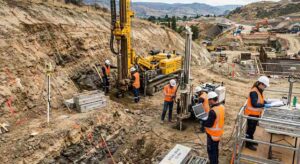
Before any building goes up, someone has to figure out what’s actually going on underground.
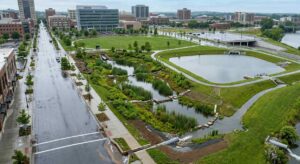
Stormwater management matters because pavement turns rain into floodwater and a pollutant load.

Every town has that one eyesore – the abandoned gas station with boarded-up windows, or

For a long time, most firms evaluated projects through a simple lens: does the financial
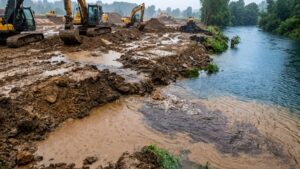
A SWPPP is the site-specific Stormwater Pollution Prevention Plan required under construction NPDES.
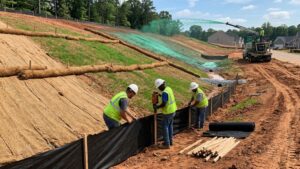
Bare soil and moving water are a predictable combination on any active construction site. Rain
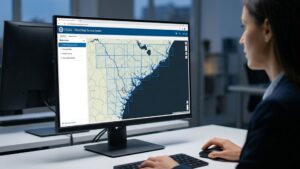
If you’re buying, developing, or financing property along the Gulf Coast (or really anywhere in
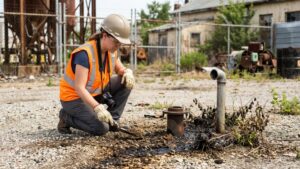
A REC is the ASTM Phase I finding that hazardous substances or petroleum are present, likely present, or threatened on a property.
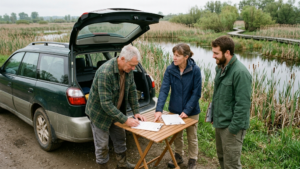
You can sometimes build on wetlands with 404/401 and state permits — after a delineation. Filling first is the expensive path.
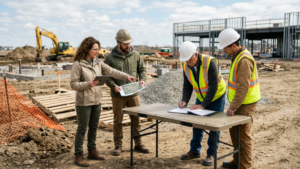
Phase I ESA cost follows site history, size, and records. This page is not a Cypress fee schedule.

Roads are something most people take for granted – until they hit a pothole the

Getting a site ready for commercial construction isn’t just about breaking ground and putting up

Construction projects fail in predictable ways. Costs run over, schedules slip, workers get hurt, materials
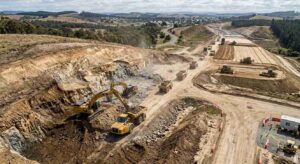
In the world of civil engineering and large-scale earthworks, precision is the difference between a