
On a construction contract, the owner needs someone on site every working day who knows the plans and specifications, records what was built, checks the materials, measures what gets paid and keeps the permits in compliance. That is construction engineering and inspection (CE&I). Cypress Environment & Infrastructure provides CE&I for state DOTs, cities, counties, ports, state agencies and private developers, in every state where we are licensed to practice engineering: Mississippi, Alabama, Louisiana, Florida & Georgia.
We provide CE&I on projects we designed and as the owner’s independent inspector on projects someone else designed. The difference is our environmental side. The people checking erosion controls, wetland limits and permit conditions work in the same firm that writes Section 404 permits and SWPPPs, so a permit problem shows up in the daily report, not in an agency notice.
Reviewed by: Cynthia Henderson, PE
Last reviewed: October 8, 2026
Change log: October 2026, new page. DOT program details checked October 5, 2026.
Who We Provide CE&I For
- State DOTs. Inspection, materials documentation, pay quantities and stormwater inspections on highway and bridge contracts, working to the DOT’s specifications and construction manual.
- Cities and counties. Roads, drainage, parks and restoration projects, including federal-aid and FEMA-funded work where the records have to support reimbursement.
- Ports and state agencies. Marine, dredging and coastal restoration construction, where survey control, as-built surveys and environmental permit conditions carry as much weight as the structure itself.
- Private developers. Resident project representative (RPR) and owner’s inspector services, so the owner and the lender know what was built, what it cost and that the permits are closed out.
What CE&I Covers, and What You Receive
| Duty | What it involves | Deliverable |
|---|---|---|
| Preconstruction | Constructability and specification review, a list of every permit condition, the preconstruction meeting, baseline photos | Permit-condition checklist, meeting minutes, baseline photo log |
| Daily inspection | Observe the contractor’s work against the plans and specifications; record work performed, crews, equipment, weather and delays | Daily work report (project diary), signed by the inspector |
| Materials | Sample and test, or coordinate testing with a qualified laboratory; check material certifications and approved sources | Test log and material certification file |
| Quantities and pay | Measure pay items in the field and reconcile them with plan quantities | Quantity records and a monthly pay estimate recommendation |
| Submittals and RFIs | Track and route shop drawings, requests for information and responses | Submittal and RFI logs |
| Changes | Document differing site conditions; prepare supplemental agreements, change orders and force account records | Change documentation with quantity, cost and time backup |
| Stormwater and erosion control | Inspect BMPs against the state permit and the plan, including rain-event inspections; track corrective actions | Permit-format inspection reports with photo log |
| Environmental permit compliance | Check Section 404 and 401 conditions, wetland limits, species work windows and turbidity limits | Compliance log and same-day notice to the owner of any exceedance |
| Survey and as-builts (with support from our network of trusted survey specialists) | Construction and as-built survey, including bathymetric survey on marine and dredging work | As-built drawings and survey files |
| Closeout | Punch list, final measurements, as-builts, final estimate, stormwater notice of termination | Closeout package |
The scope follows the duties MDOT lists in its CE&I solicitations, including measurement and documentation of pay-item quantities, daily project diaries, traffic and erosion control inspections, and as-built and final documentation (MDOT CE&I IDIQ RFP, August 13, 2025).
Whose Standards We Inspect Against
The owner’s contract documents govern. Each DOT has its own specifications, administration manual and rules on who may inspect and test. For cities, counties, ports and private owners, we work to the project’s specifications and contract.
| Owner | Governing documents | Who may inspect and test |
|---|---|---|
| MDOT | Mississippi Standard Specifications for Road and Bridge Construction, 2017 Edition; MDOT Construction Manual; Materials Division Inspection, Testing, and Certification Manual. County State Aid roads use the 2024 State Aid specifications. | The project engineer should be a Mississippi-licensed PE. Sampling and testing staff need MDOT certifications; MDOT accepts certain ACI certifications in place of its own. The acceptance laboratory must be AASHTO-accredited or MDOT-certified. |
| ALDOT | Standard Specifications for Highway Construction, 2022 Edition; ALDOT Construction Manual; ALDOT Testing Manual procedures | ALDOT prequalifies consultants under separate “Construction Engineering Inspection” and “Construction Engineering Inspection (City/County)” service types. Technicians are certified under ALDOT-405 (concrete), ALDOT-431 (earthwork) and ALDOT-374 (hot-mix asphalt). |
| FDOT | Standard Specifications for Road and Bridge Construction, FY 2026-27; Construction Project Administration Manual (CPAM) | Consultants must be prequalified under Rule 14-75, F.A.C.. Roadway CEI requires a Florida PE with at least two years of responsible-charge experience on roadway construction inspection. Field staff need Construction Training and Qualification Program (CTQP) qualifications. |
| Cities, counties and FEMA-funded work | The owner’s specifications and contract. For FEMA Public Assistance, the Program and Policy Guide in effect for the declaration and 2 CFR 200.317-200.327 | Set by the owner. 2 CFR 200.318(b) requires the grant recipient to oversee contractor performance; CE&I records are how that oversight is shown. |
Federal-Aid Rules Every CE&I File Has to Meet
- Responsible charge. When a local public agency uses consultants for construction engineering, it must keep a full-time agency employee in responsible charge (23 CFR 635.105(c)(4)). CE&I staff support that person; they do not replace them.
- Qualified testing. Testing used for acceptance must be done by qualified laboratories and personnel, and a non-DOT laboratory may perform only one type of testing on a project (23 CFR 637.209).
- Independent verification. Where contractor quality-control results are used for acceptance, verification samples must be taken independently of the contractor’s (23 CFR 637.207).
- Consultant selection. CE&I is procured by qualifications-based selection under the Brooks Act (40 U.S.C. 1101-1104) and, on federal-aid work, 23 CFR Part 172. The fee is negotiated with the top-ranked firm.
Testing
The owner’s specification sets which tests are run, how often and by whom. The common ones on roadway and site work:
- Concrete cylinders made and cured in the field (AASHTO T 23) and tested for compressive strength (AASHTO T 22)
- In-place density and moisture of soils and base by nuclear gauge (AASHTO T 310 or ASTM D6938), compared with a laboratory moisture-density curve (AASHTO T 99 or T 180)
Cypress engages its network of trusted Construction Materials Testing specialists and labs to provide CMT services.
Stormwater and Environmental Compliance During Construction
Erosion and sediment control is the part of a contract most likely to draw an agency notice, and MDOT lists a Certified Stormwater Inspector among the key personnel for its CE&I contracts. Our stormwater inspections are led by a Certified Professional in Erosion and Sediment Control (CPESC). The state permits set different clocks:
| State permit | Routine inspection | Rain-event inspection | Who may inspect |
|---|---|---|---|
| Alabama ALR100000 (effective April 1, 2026) | Monthly | After 0.75 inch or more in 24 hours. Non-linear projects: begin within 24 hours of resuming work, finish within 72 hours of the event. Linear projects: within 5 days. | A Qualified Credentialed Inspector (QCI), a Qualified Credentialed Professional (QCP, which includes a PE or CPESC), or a qualified person under a QCP |
| Florida Construction Generic Permit | At least every 7 calendar days | Within 24 hours after a storm of 0.50 inch or more; corrective actions within 7 calendar days | A qualified inspector provided by the operator |
| Mississippi MSR10 / MSR15 | At least weekly, minimum four per month | Any rain event producing a discharge | The permittee, or personnel under the permittee’s direct supervision |
DOT contracts add the DOT’s own erosion control specification.
Example (illustrative, not a Cypress project). A storm drops 0.82 inch in 24 hours, ending Tuesday at 6 p.m., on two active non-linear sites, one in Alabama and one in Florida. The Alabama contractor resumes work Wednesday at 7 a.m.
- Alabama: 0.82 inch is at least 0.75 inch, so the inspection must begin by Thursday at 7 a.m. and be complete by Friday at 6 p.m.
- Florida: 0.82 inch is at least 0.50 inch, so the inspection is due by Wednesday at 6 p.m. A deficiency found Wednesday must be fixed by the following Wednesday.
One storm, two deadlines. The daily report records the rain gauge reading and time, so each clock can be shown later.
Beyond stormwater, we track Section 404 and 401 permit conditions, wetland limits, species work windows and turbidity limits. Related: SWPPP requirements by state, construction stormwater permit consulting and erosion control BMPs.
Need inspections without full CE&I? For private construction sites in Baldwin and Mobile Counties, Alabama, and Escambia County, Florida, we also run routine NPDES stormwater compliance inspections as a separate service.
When Work Does Not Meet the Specification
- The inspector records the nonconformance in the daily report with photos, location and the specification section.
- The owner’s project engineer issues a nonconformance report (NCR) to the contractor, naming the required correction.
- The contractor proposes a remedy: remove and replace, repair, or a price adjustment where the specification allows one.
- The engineer of record is consulted when the remedy affects the design.
- The inspector verifies the correction, closes the NCR in the log and adjusts pay quantities.
Cost Drivers
CE&I on public work is usually selected on qualifications, and the fee is negotiated afterward based on staffing. What drives that staffing:
- Contract duration and number of working days
- Number of inspectors and work fronts at one time, plus night or weekend work
- Type of work (bridges, marine and dredging work need more specialized inspection than paving)
- Testing scope and coordination with our partner labs
- Survey needs, such as as-built or bathymetric surveys
- Stormwater inspection frequency and rain-event inspections
- Federal-aid or FEMA documentation requirements
- Travel to the site
CE&I Projects
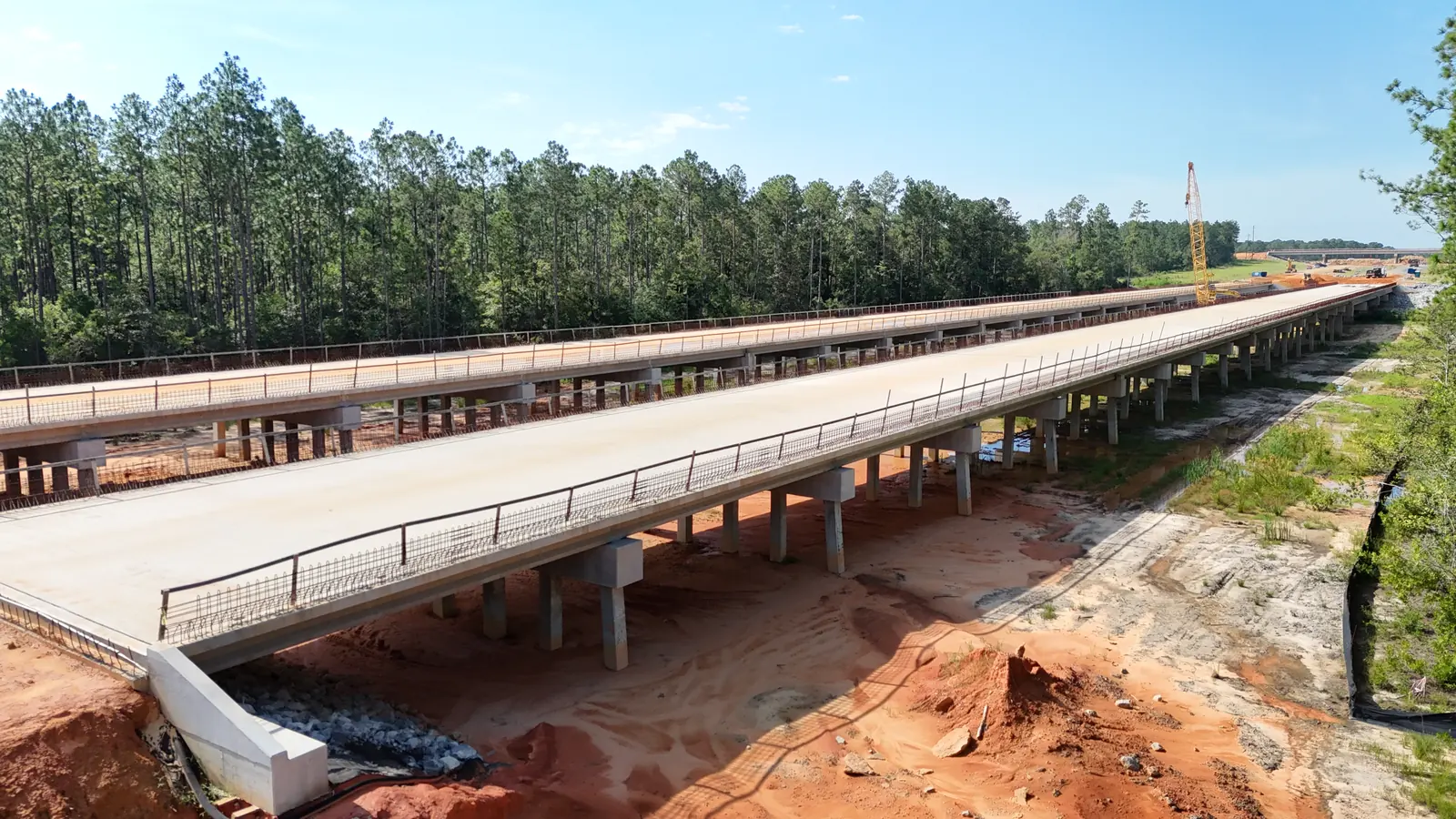
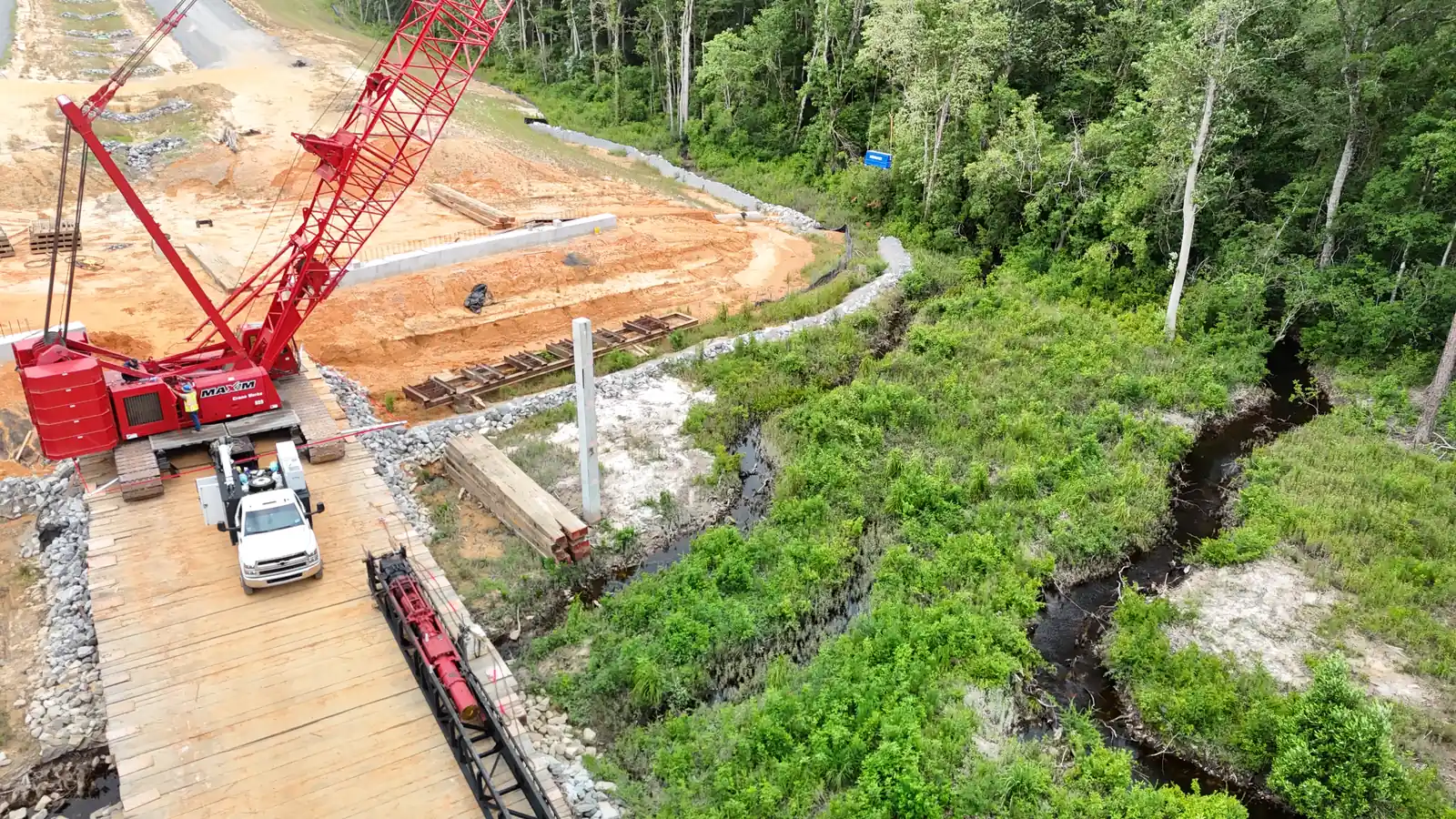
- SR 57 I-10 to Vancleave, Mississippi Department of Transportation (MDOT). Stormwater CE&I on highway construction with new lanes, bridges and stream crossings.
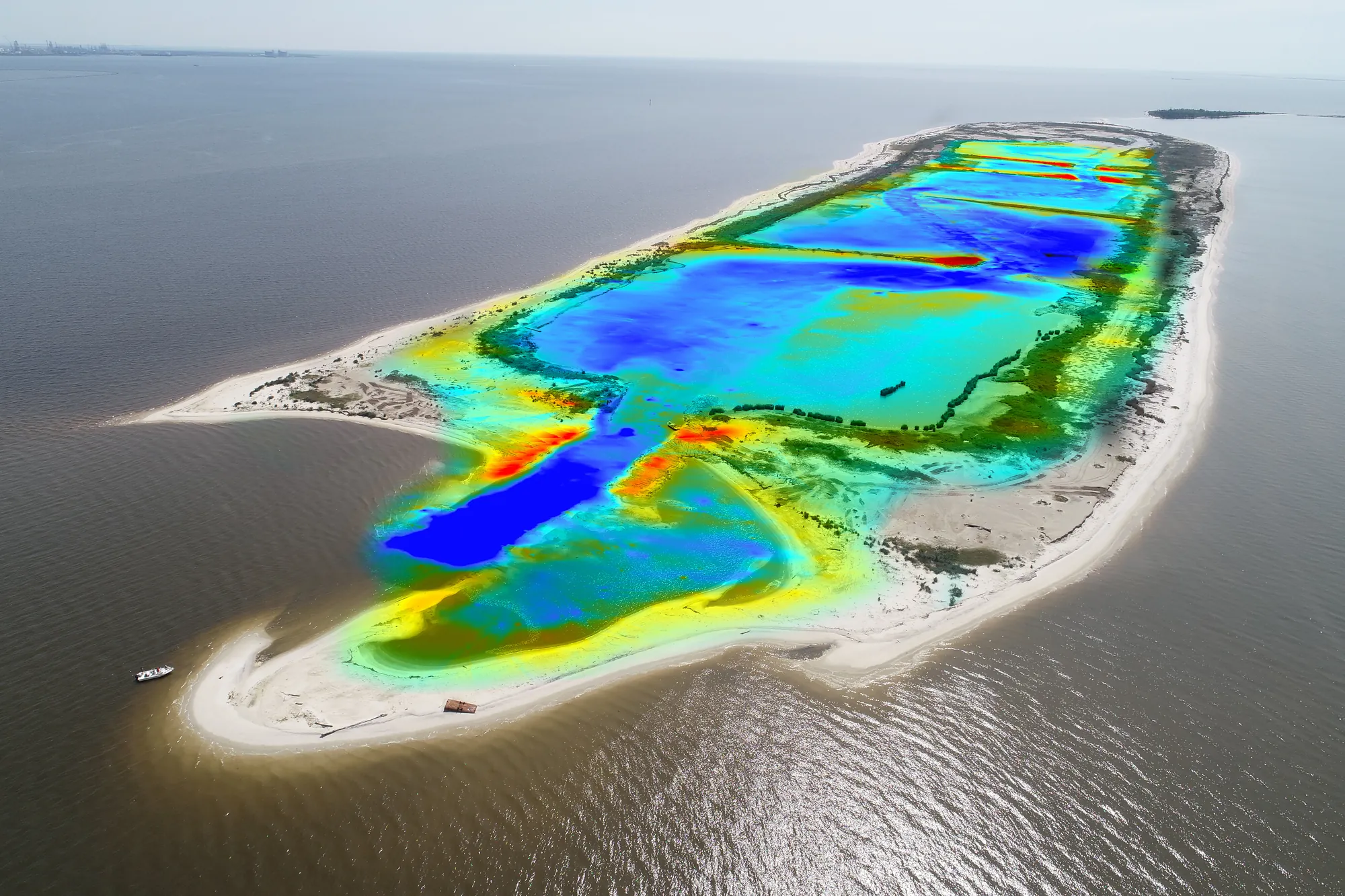
- Round Island Intertidal Circulation, Mississippi Department of Environmental Quality (MDEQ). Topographic survey, bathymetric survey and CE&I for tidal circulation channels cut across the restored marsh on Round Island in the Mississippi Sound.
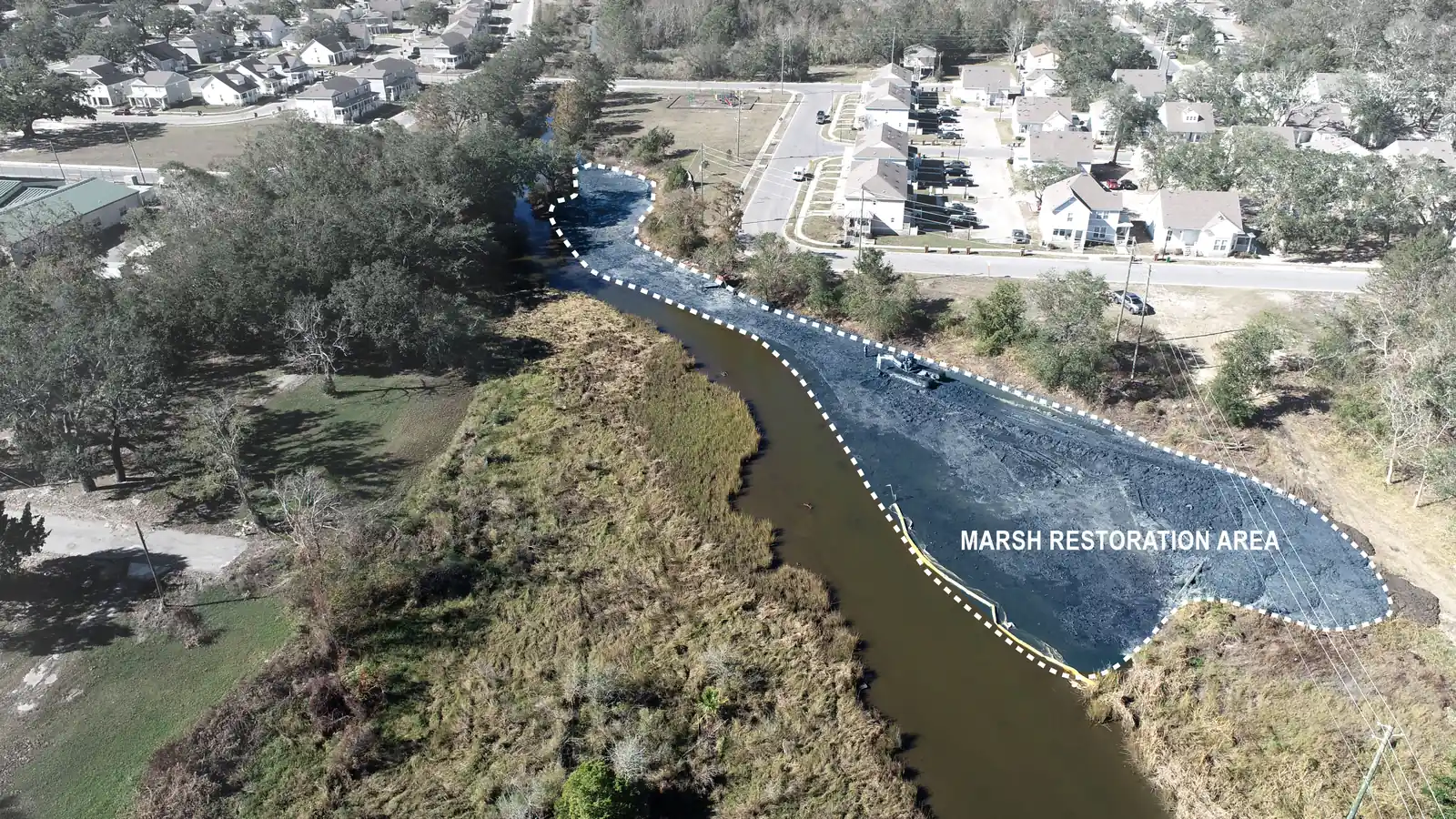
- Bayou Auguste restoration, Land Trust for the MS Coastal Plain. Design, permitting and CE&I together on an urban tidal stream and floodplain restoration in Biloxi, MS. The restoration phases won a first-place USEPA Gulf Guardian Award in 2015 (Phase 4).
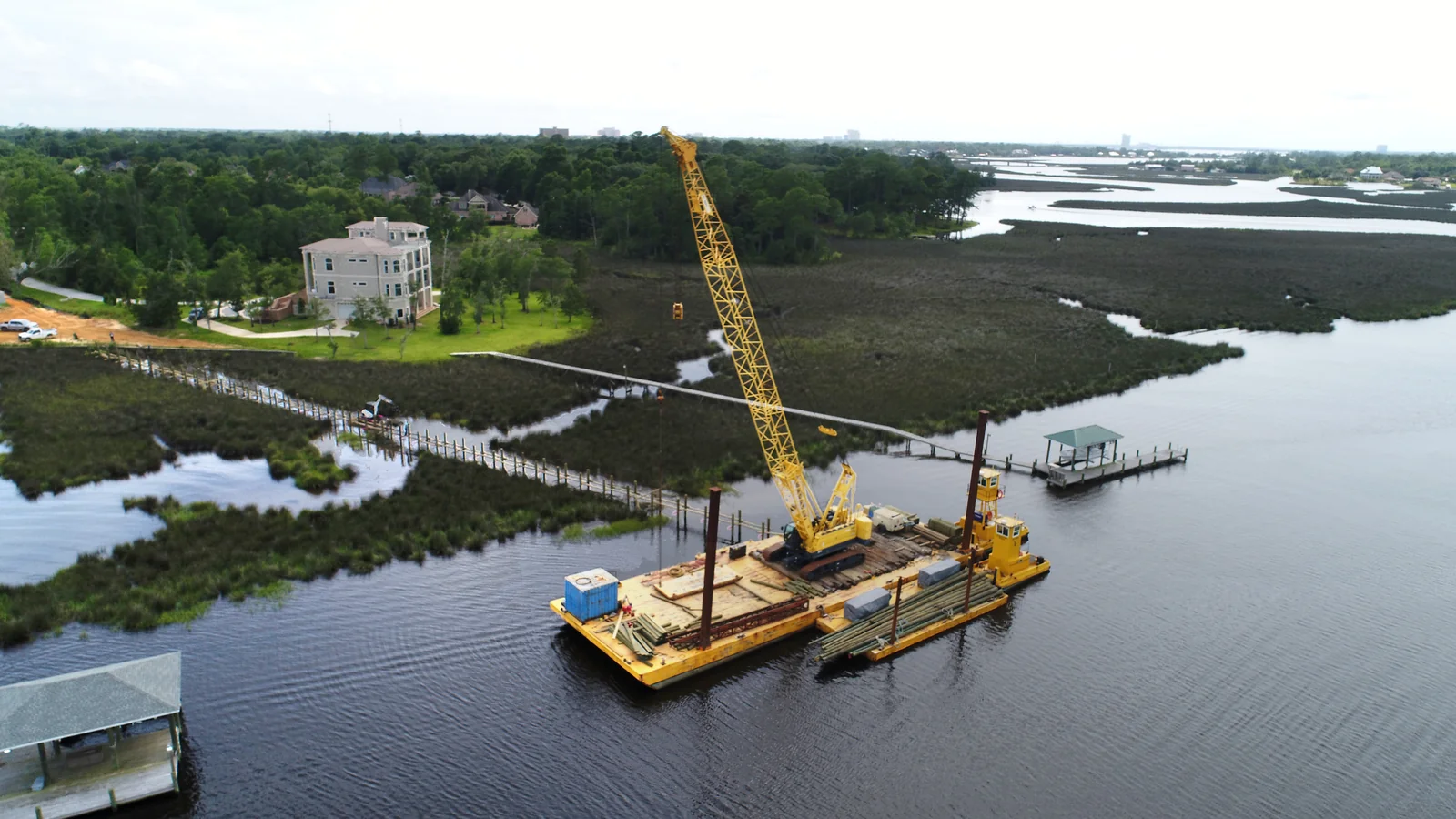
- Marshwalk pier at Shepard State Park, City of Gautier. Design, permits and CE&I for a 1,100-foot pier over marsh and Lamotte Bayou; 2021 ASCE Mississippi Small Project of the Year and ENR Regional Best Projects.
All projects: projects. Design work: civil engineering design and coastal engineering.
Frequently Asked Questions
Do you only inspect projects you designed?
No. We provide CE&I on our own designs and as the owner’s independent inspector on projects designed by other firms. On our own designs, the inspector can resolve field questions with the design team the same day.
Where do you provide CE&I?
In every state where we are licensed to practice engineering. Our offices are in Biloxi, Mobile and Pensacola, but CE&I is not limited to those areas. Call to discuss staffing for your project.
How is CE&I different from construction management or QA testing?
CE&I acts for the owner on a contract that is already let: it inspects, measures, documents and administers the contractor’s work. Construction management can also cover scheduling, procurement and cost control across contracts. QA testing is one part of CE&I: sampling and testing materials for acceptance or verification.
Who is in responsible charge on a city or county federal-aid project?
A full-time employee of the local agency (23 CFR 635.105(c)(4)). The CE&I consultant provides the inspection, testing and documentation that person relies on.
Can stormwater inspections be part of CE&I?
Yes. Erosion control and stormwater inspections are part of our CE&I scope, reported in the format the state permit requires.
Limits and Status (as of October 5, 2026)
- FDOT’s FY 2026-27 Standard Specifications apply to projects let from July 1, 2026 through June 30, 2027. ALDOT’s 2022 and MDOT’s 2017 specifications remain current, as amended by special provisions.
- ALDOT’s published CE&I prequalification lists are dated 2024; confirm current status with ALDOT.
- FDEP has a draft revision of the Construction Generic Permit dated July 2026, and MDEQ’s MSR10 expires January 31, 2027. The inspection clocks above follow the permits in effect today.
- This page does not replace the owner’s specifications, the contract or the DOT’s manuals.
Talk to Us About a Project
Send the project name or number, the owner, the location, the letting or start date and the specification the contract uses. We will tell you how we would staff it.
Call: 228-596-1580
Email: [email protected]
Headquarters: 772 Howard Avenue, Biloxi, MS. Other offices: 150 Government Street, Suite 950-1000, Mobile, AL, and 13 Palafox Place, Pensacola, FL (office locations). Related: environmental consulting services, what construction engineering is.