
Walk through any city that’s dealt with serious flooding in the last decade, and you start to notice something. The damage isn’t random. It follows patterns – places where someone, years earlier, approved development on a floodplain, or paved over wetlands that used to absorb runoff, or built too close to a coastline that was already eroding. That kind of hindsight is frustrating. And it’s exactly what an environmental planner is hired to prevent.
The profession doesn’t get nearly as much attention as architecture or civil engineering, but in many ways it’s doing the harder work – making decisions before consequences are visible, often with incomplete data and competing pressures from developers, regulators, and communities who all want different things.
What Is Environmental Planning?
There’s a version of what is environmental planning that sounds simple: figure out where to build and where not to. In practice, it’s considerably messier than that.
Environmental planning sits at the intersection of ecology, land use law, and public policy. The work involves understanding how development affects the natural systems around it – not just immediately, but over years and decades. Water tables, soil stability, wildlife corridors, coastal erosion rates – these things change slowly, and the consequences of a bad decision in 2005 might not become obvious until 2025.
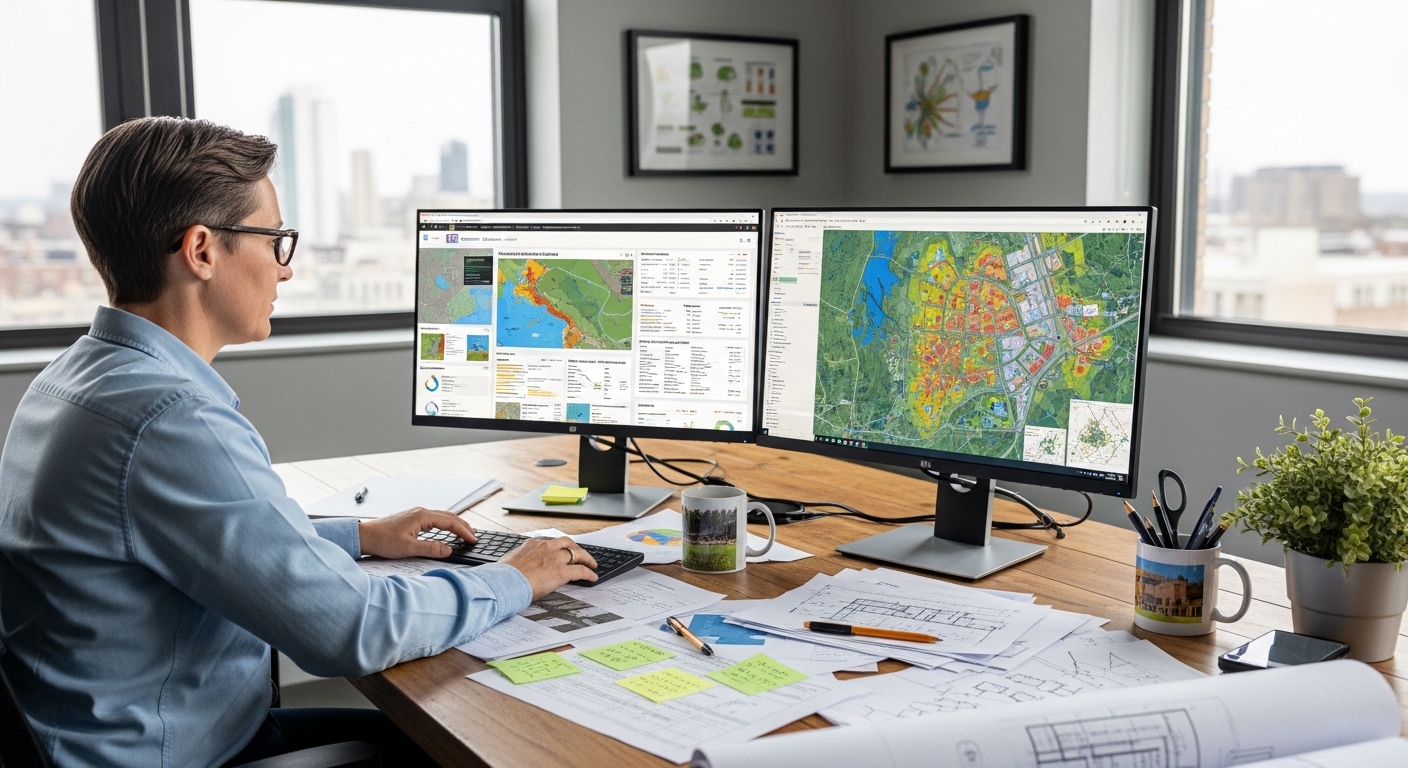
What makes the field genuinely complicated is that it rarely deals with clear-cut situations. Most projects involve trade-offs. A new road through a wetland area might improve access for a rural community while fragmenting habitat that several protected species depend on. An environmental planner’s job is to understand both sides of that equation – and then figure out whether mitigation measures can make the project acceptable, or whether the impact is simply too significant to justify.
At a practical level, environmental planning covers things like:
- Assessing how proposed projects will affect local ecosystems, water quality, and wildlife
- Developing land use and resource management plans that satisfy regulatory requirements
- Writing environmental impact statements and mitigation strategies
- Coordinating with government agencies, developers, and community stakeholders
- Monitoring ongoing projects to make sure their real-world impacts match the predictions
Firms like Cypress Environment & Infrastructure work on exactly this kind of project – helping clients navigate the permitting process while making sure the environmental groundwork is done properly from the start.
What Does an Environmental Planner Do?
People going into this field expecting mostly outdoor fieldwork sometimes find the reality a bit different. There’s fieldwork – site assessments, wetland delineations, sampling – but a significant portion of the week involves sitting at a desk writing reports, reviewing regulatory submissions, or working through GIS data. That’s not a complaint. It’s just worth knowing before you commit.
A full environmental planner job description typically covers:
- Research and impact assessment. Before anything gets built, someone has to understand what’s already there – the hydrology, soil conditions, species using the site, and the regulatory designations that apply. That’s where most assessments start.
- Regulatory navigation. Environmental permits are not simple documents. Understanding what’s required under the Clean Water Act, state wetland regulations, coastal zone management rules, and local zoning codes – and then actually getting those permits approved – requires real expertise. A lot of projects stall at this stage when it isn’t handled well.
- GIS and spatial analysis. Mapping tools are central to the work. Planners use them to analyze land cover, model floodplains, identify sensitive habitat areas, and visualize proposed changes against existing conditions.
- Written communication. Environmental reports get reviewed by attorneys, agency staff, engineers, and sometimes judges. They need to be precise and defensible. Writing clearly is not optional.
- Stakeholder engagement. Development projects affect real communities that increasingly expect to be part of the conversation. Planners organize public hearings, address concerns, and sometimes serve as translators between technical findings and what residents need to understand.
Key Skills Required for an Environmental Planner
It’s easy to list skills that sound relevant – analytical thinking, communication, attention to detail – but those apply to roughly half of all professional jobs. What distinguishes a strong environmental planner specifically?
- Comfort with uncertainty. Environmental assessments involve prediction, and prediction is inherently imprecise. Planners make professional judgments based on incomplete information and have to be prepared to defend them. People who need clean, definitive answers find this genuinely difficult.
- Regulatory knowledge. You don’t need to be a lawyer, but you need to understand how environmental law works in practice – what requires a permit, what triggers an exemption, and where the grey areas are. In the Southeast, that means knowing Section 404 of the Clean Water Act inside and out, as well as state-specific frameworks in Florida, Alabama, Mississippi, and Louisiana.
- GIS proficiency. This is a genuine technical skill that takes time to develop – not just clicking around in a mapping interface. Strong planners can build spatial analyses from scratch and produce outputs that actually communicate something useful.
- The ability to manage competing interests. Developers want projects approved. Agencies want compliance. Communities want their concerns heard. A good planner holds all of that in mind without losing track of the actual goal.
Environmental Planner Salary: What to Expect
An environmental planner’s salary is respectable, though it’s not the kind of field people enter for the money. A few things that genuinely move the needle on environmental planner salary:
- Sector. Private consulting tends to pay more than government positions, though government work usually offers better benefits and more predictable hours.
- Specialization. Wetland scientists, coastal engineers, and planners with expertise in high-demand niches typically earn more than generalists.
- Credentials. The AICP designation from the American Planning Association is widely recognized. For planners in wetland-heavy states, the Professional Wetland Scientist credential matters too.
- Geography. Markets with active coastal development or major federal infrastructure investment tend to have stronger demand and better environmental planner salary ranges.
Salary by Experience Level
The salary distribution by level of experience shows a significant difference. Beginners and specialists with many years of experience receive different salaries. The trajectory looks roughly like this:
- Entry-level planners – fresh out of school, working in support roles – typically earn $45,000 to $60,000 depending on region and employer. It’s enough to live on, not enough to feel comfortable yet. The learning curve in these early years is steep, and the work involves many tasks that more senior staff don’t want to do. That’s normal.
- Mid-career planners with 5 to 8 years of experience and a defined specialty earn significantly more – often $65,000 to $90,000, and sometimes higher in competitive markets. At this level, people manage projects and navigate complex permitting processes without much oversight.
- Senior planners and project managers at established firms can earn well above $100,000, particularly in private consulting. These roles involve strategic project leadership, business development, and the kind of judgment that comes from having handled many situations that didn’t go according to plan.
Education Path: How to Become an Environmental Planner
The most common path starts with an undergraduate environmental planner degree in environmental science, geography, urban planning, or something adjacent. From there, many go on to a master’s program in planning, environmental management, or a related discipline.
The master’s isn’t strictly required to get started, but it’s become increasingly expected for roles involving independent judgment or policy work. It also helps in competitive hiring markets where candidates have similar undergraduate backgrounds.
What actually differentiates candidates at the entry level is practical experience. Internships with consulting firms, state environmental agencies, or conservation nonprofits give you something more valuable than coursework: exposure to how real projects work, with real constraints and real consequences. Two candidates with similar academic records will be evaluated almost entirely on their work outside the classroom.
Certifications come later, once you’ve accumulated enough professional experience to qualify. An environmental planner degree alone won’t get you the AICP – that requires a combination of education and supervised work experience. The PWS designation requires fieldwork hours and demonstrated technical competency. Neither is quick to obtain, which is part of what makes them meaningful.
Career Growth and Advancement Opportunities
The early years can feel like a lot of grunt work – collecting data, formatting reports, sitting in on meetings where your job is mostly to listen and take notes. That phase passes.
Mid-career is where things get more interesting. Environmental planning careers who develop genuine expertise in a specialty – coastal resilience, stormwater management, wetland mitigation, environmental compliance for large infrastructure projects – find that the problems they’re asked to solve become progressively more complex. That’s when the job starts to feel like a real professional identity rather than just a position you’re trying to grow out of.
Senior roles involve a different kind of challenge. It’s less about knowing the technical answers and more about managing projects with many moving parts, navigating situations where the regulatory path isn’t clear, and building client relationships that keep work coming in over the long term. Some planners move into policy roles, shaping the rules rather than just working within them. Others move into consulting leadership or executive positions.
The common thread is that this career rewards depth. The environmental planners who advance fastest are usually the ones who have become very good at something specific.

Where Environmental Planners Work
The range is wider than most people assume when starting.
Government agencies at the federal, state, and local levels employ planners in regulatory, policy, and project management roles – stable work with real influence over how environmental rules get applied in practice.
Engineering and consulting firms like Cypress EI work across a variety of project types for both public and private clients. The work is more varied, the pace is faster, and the exposure to different environmental challenges tends to be broader than in a government position.
Conservation nonprofits and land trusts hire planners for roles combining technical work with advocacy. The pay is often lower, but the mission alignment is stronger for people who entered the field because they genuinely care about conservation outcomes.
Private developers and corporations increasingly have in-house environmental staff – people whose job is to manage permitting, handle compliance, and reduce the risk of costly project delays.
Most planners spend time in more than one sector over the course of a career, and the experience translates reasonably well across all of them.
FAQ
Is this career in high demand?
Genuinely solid, particularly in states with active coastal development and complex regulatory environments. The Gulf Coast states – Louisiana, Mississippi, Alabama, and Florida – have sustained a need for planners with regional expertise, and federal infrastructure investment has only added to that.
How long does it take to qualify?
Four years for a bachelor’s, one to two more for a master’s if you go that route. Add a couple of years of professional experience before you’re eligible for most certifications. Realistically, it takes five to seven years before you’re fully credentialed and operating independently.
Do planners work in offices or in the field?
Both, and the balance depends on your specialty. Wetland scientists and coastal planners spend meaningful time on-site – walking properties, collecting samples, documenting existing conditions. Someone focused on regulatory compliance or GIS analysis might go weeks without leaving the office. Most planners land somewhere in the middle: desk work the majority of the week, with periodic field visits for site assessments or client meetings.
Can you specialize within this profession?
Yes, and the field rewards it. Wetland science, coastal planning, climate adaptation, stormwater management, and transportation environmental review are all areas where deep expertise translates into better opportunities and higher pay.