
Construction projects fail in predictable ways. Costs run over, schedules slip, workers get hurt, materials arrive late or wrong. Legal disputes freeze work mid-project. None of this is random – most of it traces back to problems that were visible early and not addressed.
Construction risk management is the discipline of identifying problems before they become costly. It’s not paperwork for its own sake. It’s the difference between a project that finishes on time and one that doesn’t.
Common Construction Risks: Types and Examples
Understanding risks in construction projects starts with knowing where they come from. The categories are consistent across the industry.
- Safety. Falls from height, struck-by incidents, equipment accidents, and electrocution – these are the leading causes of construction fatalities. Most happen when workers skip PPE, use equipment incorrectly, or work in conditions that weren’t properly assessed. Briefings help, but a safety culture that actually gets followed on the ground is what moves the numbers.
- Financial. Budget overruns happen for several reasons: material costs were estimated incorrectly, the scope expanded mid-project, delays caused penalties and extended equipment rentals, or an unexpected site condition required redesign. Any one of these can turn a profitable project into an unprofitable one. All of them together can end a company. Supply chain disruption has become a more significant factor in recent years – lead times that used to be weeks are now months for some materials, and that has to be built into both the schedule and the contingency budget.
- Technical. Design errors, material defects, structural failures, and problems with engineering systems. These often don’t show up until later in the project, when fixing them is most expensive. A defect in a foundation doesn’t become apparent until the floors are being framed. A calculation error in a load-bearing element might not manifest until loading begins.
- Legal. Permit violations, contract disputes, non-compliance with building codes or environmental regulations, and liability from third-party injury. Legal construction risk tends to be slow and expensive. Disputes that could have been resolved quickly with clear contract language drag on for years. The most common trigger is an ambiguous scope – work that one party thought was included and the other thought wasn’t. Clear, specific contracts don’t eliminate disputes, but they resolve most of them before they reach lawyers.
Risk Management in Construction Projects: Key Principles
Risk management in construction projects follows a consistent process regardless of project size:
- Identification. You can’t manage a risk you haven’t named. Before a project starts, the team should systematically work through what could go wrong – site conditions, weather, subcontractor reliability, supply chain exposure, and regulatory requirements. This isn’t a one-time meeting. Risks in construction projects evolve as work progresses.
- Assessment. Once risks are identified, they need to be evaluated: how likely is this to happen, and how bad would it be if it did? A risk that’s unlikely but catastrophic gets treated differently from one that’s likely but minor. This assessment determines where management attention and budget reserves go.
- Prioritization. Not every risk deserves the same response. Time spent managing a low-probability, low-impact risk is time not spent on something that could actually stop the project. The construction project risk management plan should reflect what actually matters – which risks could kill the schedule, blow the budget, or hurt someone.
A good construction project risk management plan doesn’t just list risks. It assigns ownership, defines response protocols, and gets reviewed at regular intervals throughout the project rather than filed away after kickoff.
Construction Risk Mitigation Strategies
Construction risk mitigation is the work of reducing either the probability of a risk occurring or the damage it causes when it does. Every mitigation action falls into one of two categories: prevention (stop the risk from happening) or response (limit the damage when it does). A solid construction risk mitigation plan has both.
- Training. Most site accidents involve known hazards and known preventable behaviors. Regular training – not just at onboarding but throughout the project as conditions change – keeps those behaviors consistent. Equipment changes, new subcontractors on site, and shifting work locations all create moments where additional briefings are worth doing.
- Quality control. Catching a material defect at delivery costs almost nothing. Catching it after it’s been installed costs significantly more. Inspection at critical stages – foundation, framing, and MEP rough-in – prevents defects from going undetected.
- Financial planning. A contingency reserve isn’t a sign of poor planning. It’s a sign of realistic planning. Construction mitigation for financial risk includes maintaining a reserve fund sized to actual project uncertainty, using fixed-price contracts where possible to transfer price risk, and insuring against catastrophic events that a reserve can’t cover.
- Monitoring. A risk that was identified and assessed is only managed if someone is watching it. Weekly check-ins against the risk register, regular site inspections, and progress reporting that flags deviations early are what turn a construction project risk management plan into an active management tool. Risks also change – a supplier that was reliable last month may now have capacity problems. The register should be updated as conditions shift, not just consulted when something goes wrong.
Technology and Tools for Risk Reduction
Digital tools have changed how construction risk management gets done at the project level.
- Project management software. Platforms like Procore, Autodesk Construction Cloud, and similar tools centralize schedule tracking, documentation, and issue management. When a delay or defect gets logged, it’s visible to the whole team rather than sitting in someone’s inbox.
- Analytics. Historical data from past projects – where overruns occurred, which subcontractors had quality issues, and which site conditions caused schedule impacts – informs risk assessment for new projects. Companies that track and use this data are consistently better at estimating and planning than those that don’t.
- BIM (Building Information Modeling). Clash detection in a 3D model identifies conflicts between structural, mechanical, and electrical systems before they appear in the field. A coordination issue in the model takes a few hours to resolve. The same problem was found during installation, costing days.
- Digital reporting. Real-time field reporting – photos, checklists, inspection records – creates a documented record that supports both quality control and legal defense in the event of disputes. Paper-based reporting that sits in a site trailer doesn’t support either.
Best Practices for Preventing Construction Risks
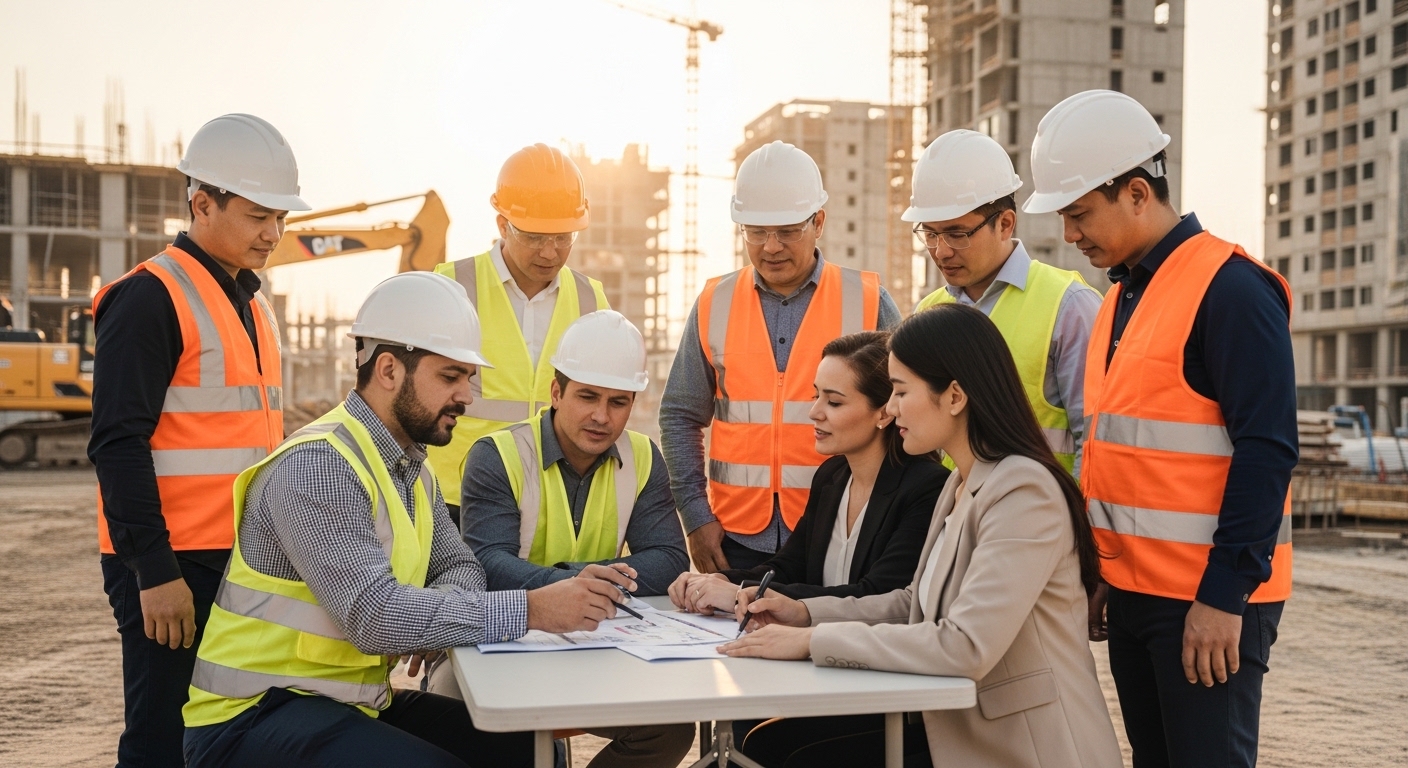
The application of best practices helps minimize risks and increase the efficiency of project management. The application of such actions contributes to the successful implementation of work. Here are the main practices:
- Proactive planning. The cheapest time to address a construction risk is before work starts. Pre-construction risk reviews involving the project manager, site superintendent, key subcontractors, and the owner tend to surface issues that no single party would catch on their own. Scope ambiguity, site access constraints, long-lead material items – these get resolved at the planning stage, or they get resolved later at higher cost.
- Regular site inspections. A schedule of documented inspections – daily foreman reports, weekly superintendent walks, periodic third-party reviews – creates accountability and catches problems while there’s still time to fix them cheaply. Inspections also signal to the crew that quality and safety are being watched, which affects behavior.
- Clear accountability. Ambiguity about who owns a decision is what makes construction risk a construction problem. When a scope change happens, who approves it? When a subcontractor misses a milestone, who escalates it? A clear responsibility matrix doesn’t prevent problems, but it ensures someone is responsible for responding to them.
- Safety culture. The difference between a site with low incident rates and one with high incident rates is rarely the safety rules – it’s whether those rules are actually followed. That comes from leadership behavior. Supervisors who stop work for safety issues, who wear PPE themselves, and who don’t pressure workers to skip steps because the schedule is tight build sites where safety actually functions.
- Documentation. Construction mitigation also means being ready to defend your decisions if something goes wrong. Change orders documented in writing, inspection records, meeting minutes, and correspondence kept in a central system protect the project from disputes where memory becomes evidence. A project with good records resolves disputes faster and cheaper than one without them – sometimes just showing the documentation is enough to end an argument before it becomes a claim.
Cypress Engineering provides construction risk management and project planning services for civil and infrastructure projects. Get in touch to discuss your project.