
Bare soil and moving water are a predictable combination on any active construction site. Rain hits graded earth, picks up sediment, and heads toward the nearest drain, ditch, or water body. Left uncontrolled, that process causes erosion, degrades water quality, triggers regulatory violations, and generates the kind of enforcement attention no project needs mid-construction.
Best Management Practices (BMPs) are how the industry manages that risk. Choosing the right ones, installing them correctly, and keeping them functional throughout the project are baseline expectations under federal and state stormwater regulations. Here’s what that actually looks like in practice.
What Does BMP Stand for in Construction?
What does BMP stand for in construction? Best Management Practice. It’s a broad term that covers both physical structures – silt fences, sediment basins, inlet protection – and procedural controls, such as proper material staging and construction sequencing. Together, they form the operational framework for managing stormwater and erosion on a job site.
BMP civil engineering isn’t a single solution. It’s a category of solutions, and the right combination depends on site-specific conditions: slope, soil type, drainage patterns, proximity to water bodies, and the sequence of construction activities. What works on a flat, inland commercial site is often wrong for a sloped, coastal parcel, and getting it wrong creates both environmental damage and compliance exposure.
NPDES Construction General Permits require the use of BMPs as part of a site’s Stormwater Pollution Prevention Plan. They’re not optional add-ons. They’re permit conditions.
Types of Erosion Control BMPs
There are four broad categories, and most projects use more than one simultaneously.
- Structural BMPs are physical installations, such as silt fences, sediment traps, check dams, sediment basins, and inlet protection devices. They intercept sediment-laden runoff before it leaves the site or enters a drainage system.
- Non-structural BMPs include practices like mulching, temporary seeding, and phased grading – approaches that reduce erosion at the source rather than capturing sediment downstream.
- Temporary erosion control BMPs are deployed during active construction, when the ground is most disturbed and most vulnerable. They’re installed before grading starts and maintained until permanent stabilization is established.
- Permanent BMPs remain in place after construction is complete – vegetated swales, retention ponds, and other features that provide long-term stormwater management.
Most projects require a mix. Knowing which types of BMPs apply to a given phase of construction – and which ones need to be in place before work begins – is where planning matters most. Our Civil Engineering Modeling Services integrate BMP planning into site design from the start, rather than treating it as something to address after grading is underway.
Best Management Practices Examples on Construction Sites
The best management practices examples vary by site, but some show up on almost every project we work on across the Gulf Coast:
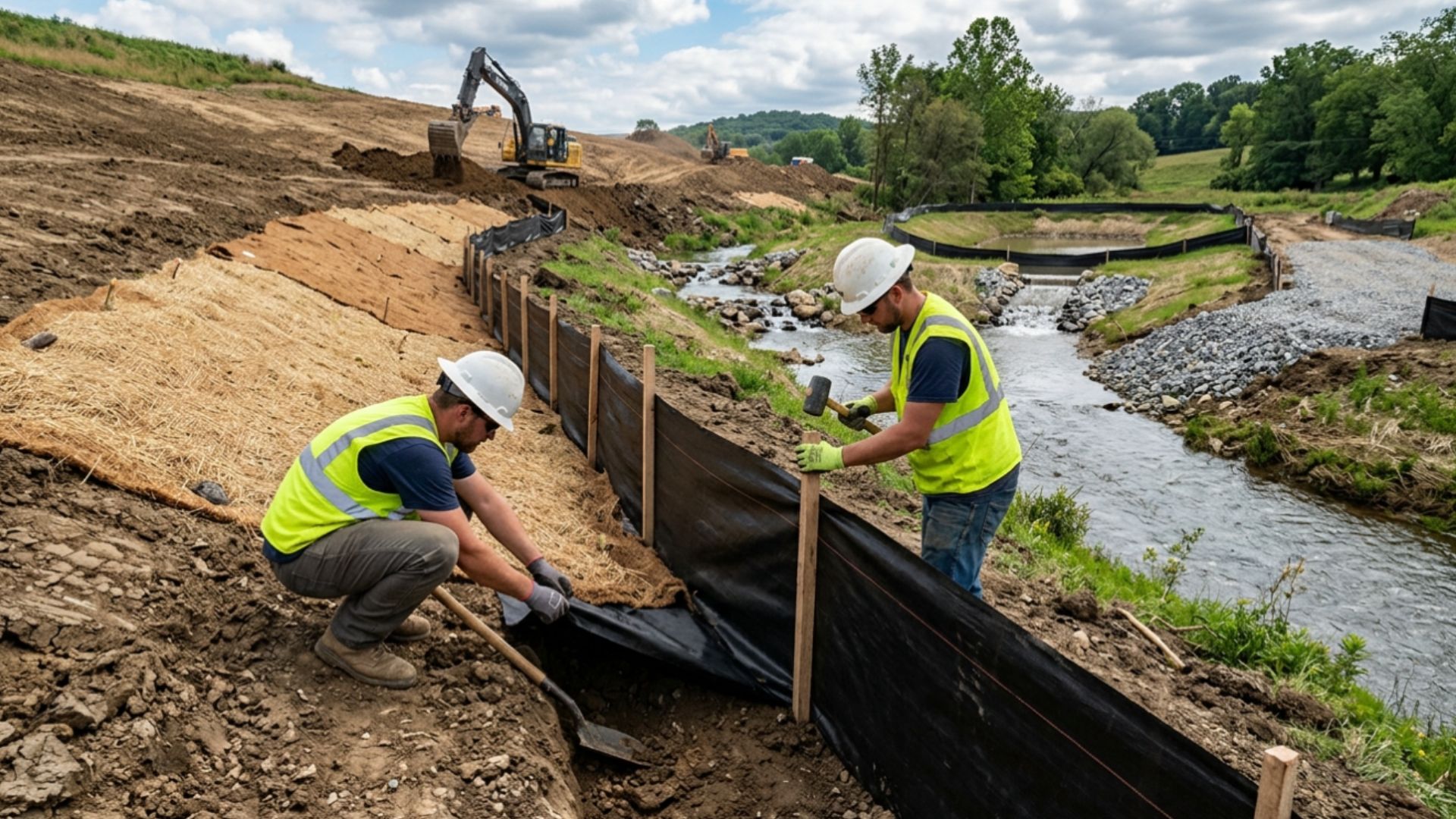
- Silt fences along active slopes and perimeter edges are the most common. They trap sediment and slow sheet flow – but only when installed with a trenched base. A silt fence staked without trenching fails under the first significant rain.
- Stabilized construction entrances reduce the amount of mud tracked onto public roads from equipment wheels. They seem minor until an inspector shows up and the road in front of the site is covered in sediment.
- Inlet protection – filter socks, rock bags, or fabric barriers around storm drain openings – prevents sediment from entering the drainage system during active construction.
- Temporary seeding and hydroseeding stabilize disturbed soil on areas that won’t be worked for weeks or months. Fast-germinating cover crops are standard; the goal is ground cover quickly enough to reduce erosion between construction phases.
BMP Installation: Key Steps and Requirements
Correct BMP installation starts before construction, not after problems appear. The standard sequence: site assessment first, then SWPPP development, then BMP layout and installation timed to precede any ground disturbance.
The most common installation failures we see are sequencing problems – BMPs installed after grading has started – and maintenance gaps where systems aren’t inspected and repaired after storm events. A silt fence that’s been overtopped and never repaired isn’t functioning. A sediment basin that hasn’t been cleaned after heavy rain is operating at reduced capacity. Neither meets permit requirements, regardless of whether they were installed correctly at the start.
BMP installation requires documented inspections, typically every 7 days and within 24 hours of any rain event exceeding 0.5 inches. Every inspection gets recorded. Every deficiency gets corrected and noted. That documentation trail is what demonstrates compliance when regulators show up.
Why BMPs Are Critical for Environmental Compliance
This is where BMP environmental compliance connects to real project risk. EPA and state environmental agencies have enforcement authority over stormwater discharges from construction sites. Violations – turbid discharge, failed BMPs, missing documentation – can result in notices of violation, stop-work orders, and civil penalties totaling thousands of dollars per day.
Beyond penalties, there’s the issue of project continuity. A stop-work order on an active construction site is expensive in ways that extend well beyond the fine itself: subcontractor schedules, material delivery windows, and financing timelines. None of it waits while a compliance issue gets sorted out.
BMP civil engineering done right means the systems are appropriate for the site, installed before they’re needed, maintained throughout construction, and documented consistently. That’s not a complicated standard – but it requires someone paying attention to it from day one.
The BMP environmental piece also matters post-construction. Permanent stormwater management features need to be designed in conjunction with site grading and drainage, not retrofitted after the fact. That integration is part of what our Environmental Consulting Services bring to development projects – making sure environmental controls are built into the project plan rather than treated as a compliance checkbox at the end.
If you’re planning a construction project and working through what erosion control BMPs your site will require, contact our team, and we’ll walk through the site conditions and regulatory requirements with you before ground breaks.