
Engineering disasters shape modern civil practices. They span structural breakdowns to failures. These events highlight the critical consequences. They concern design flaws and human error. Each incident provides valuable insights. They drive improvements in safety and project management. Construction disasters emphasize the importance of rigorous planning. They ensure quality control and regulatory compliance. Engineers studying past engineering fail. They learn important lessons. They prevent similar mistakes from recurring.
These disasters have spurred the development of advanced technologies. Engineers use innovative materials. They also utilize stricter building codes. Engineers foster a culture of responsibility. They build continuous improvement within the industry. We will discuss the impact of construction disasters on future projects. They are warnings and catalysts for progress. Engineers ensure that lessons from the past lead to the creation of more reliable systems. They provide the future resilience of infrastructure. Let’s explore all the nuances together.
The Tacoma Narrows Bridge Collapse: A Landmark Engineering Failure
In 1940, the world witnessed one example of engineering gone wrong. The Tacoma Narrows Bridge in Washington State, nicknamed “Galloping Gertie” by locals, lasted only four months. Then it was torn apart by the wind.
Imagine: the bridge begins to sway and writhe like a snake until it completely collapses. The whole thing was caught on camera, and these images are still shown to engineering students today. The problem was that the engineers did not take into account how the wind would interact with the structure.
This civil engineering issue was a turning point. Engineers realized that it was not enough to simply calculate the loads. They also needed to consider how nature would affect the structure over time.
What we learned from this story:
- The wind is serious. Any large structures, especially those near water, must be designed to withstand constant wind loads. This applies not only to bridges, but also to coastal protective structures.
- Flexibility can be dangerous. When a structure is too flexible, it can start to sway more and more. Modern engineers use computer modeling to predict such situations.
- Materials need to be tested in real-world conditions. Laboratory tests are good, but you need to understand how the material will behave in rain, salt water, heat, and cold.
After the Tacoma Narrows bridge design changed forever. Now every new bridge is tested in wind tunnels. Now, engineers must take into account the environmental factors of a particular location.
The Chernobyl Disaster: Engineering Fails in Nuclear Safety
Chernobyl in 1986 is perhaps the most terrifying example of engineering fails in history. The explosion at the nuclear power plant not only destroyed the reactor but also turned vast areas into a dead zone for decades to come.
Several mistakes came together here: an incorrect reactor design, a violation of safety procedures, and an underestimation of the risks. The operators were conducting a test that got out of control. The reactor overheated, an explosion occurred, and a radioactive cloud spread across Europe.
But the most frightening thing is the environmental consequences. Radiation killed the forests around the station (they are called the “red forest”). Thousands of square kilometers became uninhabitable. The groundwater is contaminated. Animals and plants mutated. Even now, almost 40 years later, the exclusion zone remains dangerous.
Environmental lessons from Chernobyl:
- Nature does not forgive mistakes. In industrial facilities, one mistake can destroy an ecosystem for generations to come. It will take centuries to restore the areas around Chernobyl.
- Environmental monitoring is critical. After the construction disaster, it became clear that permanent systems were needed to monitor radiation levels, groundwater conditions, and the health of ecosystems around hazardous facilities.
- Restoring ecosystems is a long-term endeavor. Chernobyl has become the largest testing ground for studying how nature recovers from radiation contamination.
Chernobyl changed not only nuclear energy but also the approach to environmental safety in general. Companies such as Cypress EI now conduct mandatory environmental risk assessments for all industrial projects.
The Hyatt Regency Walkway Collapse: A Tragic Lesson in Structural Engineering
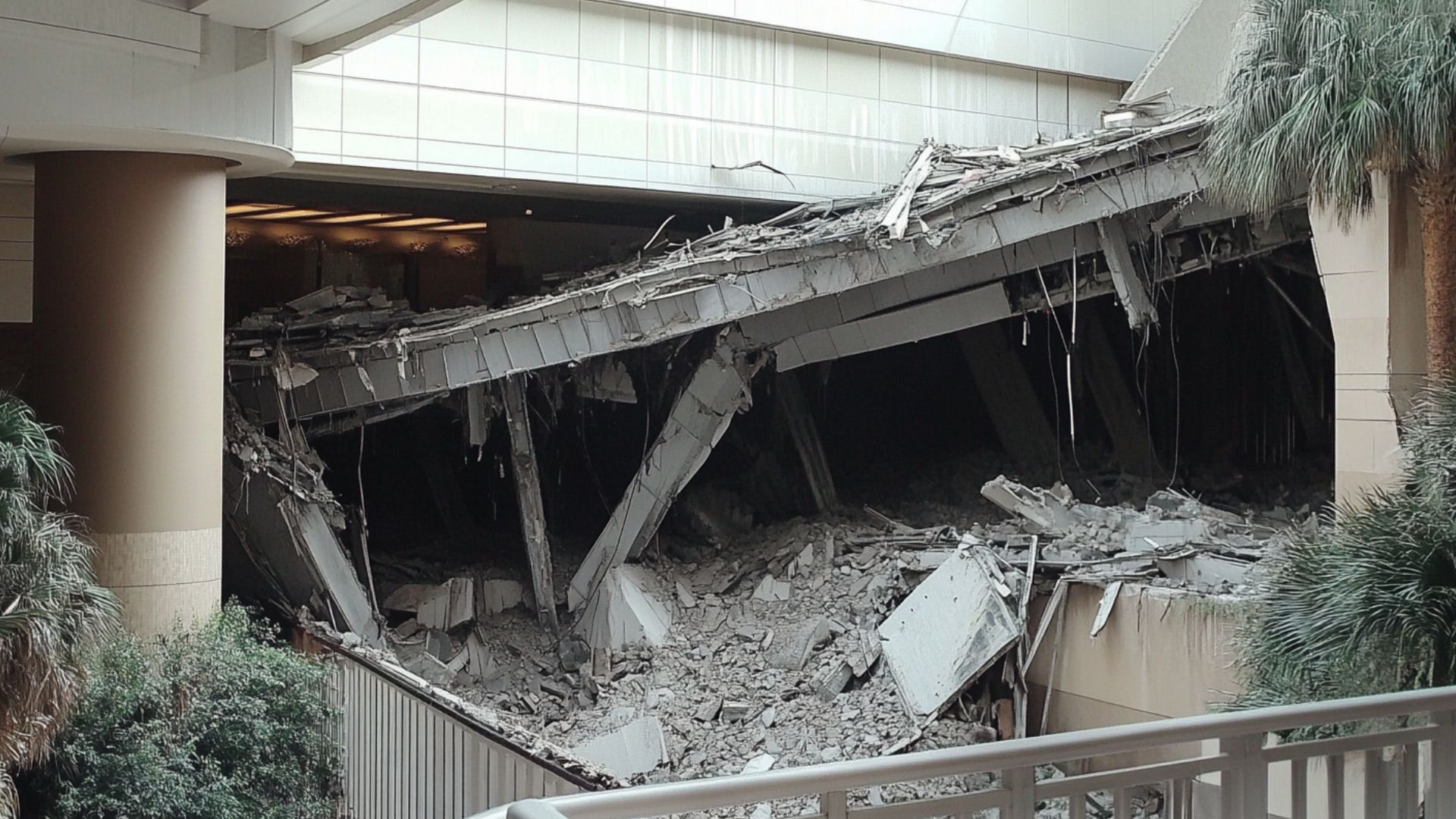
On July 17, 1981, a tragedy occurred at the Hyatt Regency Hotel in Kansas City that showed how important every detail is in construction. Two suspended walkways collapsed during a dance party. One hundred fourteen people were killed, and more than 200 were injured.
What happened? During construction, someone decided to “simplify” the mounting structure. Instead of one long rod that would hold both walkways, two short ones were installed. It seemed like a minor detail. But this change doubled the load on the upper mounting. And one day, it simply couldn’t withstand the load.
This is a classic example of a failed construction project – when a small change that no one really checked leads to disaster.
After the Hyatt Regency construction disaster, everything changed. Now, any changes to a project during construction must be documented and approved by a design engineer. Mandatory independent inspections for complex structures were introduced.
This tragedy taught the industry that communication between designers and builders is a matter of life and death. Everyone must understand why a structure is designed the way it is and not differently.
The Challenger Disaster: Engineering and Design Failures in Space Exploration
On January 28, 1986, the whole world watched as the Challenger space shuttle exploded 73 seconds after launch. Seven astronauts were killed, including teacher Christa McAuliffe, who was to become the first ordinary citizen in space.
The cause of these engineering fails was a rubber O-ring in the rocket booster. It was very cold that morning, around zero degrees. The rubber stiffened in the cold and failed to seal the joint properly. Hot gases escaped and ignited the external fuel tank.
The worst thing is that the engineers warned about this. They said, “It’s too cold, postpone the launch.” But management did not listen. This became an example of what happens when the opinions of technical specialists are ignored.
After the Challenger disaster, NASA completely changed its approach. Now, engineers have the right to stop the launch if they see a risk. As in the case of Chernobyl, independent checks are now mandatory, and the decision to launch is made based on data rather than political pressure.
The Leaning Tower of Pisa: A Case of Civil Engineering Mistakes
The Tower of Pisa is the most famous example of civil engineering problems in history. Everyone knows this leaning tower, but few people realize that it is the result of a serious engineering mistake.
Construction began in 1173. By the third floor, five years later, the tower had already begun to lean. The problem? No one checked what was underground. The foundation, only 3 meters deep, could not hold 14,000 tons of stone on soft clay and sand.
Interestingly, the builders noticed this and tried to fix it. They began to make one edge of each floor higher to compensate for the tilt. The result was not just a leaning tower, but also a slightly curved one. Construction took almost 200 years, with breaks for wars, and this, oddly enough, saved the tower – the ground had time to compact a little.
By 1990, the tower had already tilted 5.5 degrees and could collapse at any moment. Then the engineers carried out a brilliant operation – they began to carefully remove soil from one side of the foundation, allowing the tower to “settle” slightly in the right direction. In two years of work, they reduced the tilt to 3.97 degrees. The tower now stands as it did in the 1700s.
What we learned from this story:
- Geological surveys are not a luxury. Today, surveys are mandatory before any construction. Wells are drilled, the soil is examined at different depths, and the groundwater level is checked. What is underground is often more important than what is above ground.
- Deep foundations mean safety. This is especially important for tall buildings and heavy structures. In coastal areas, where Cypress EI often works, this is critical – the soil there is often saturated with water and unstable.
- Monitoring does not stop after construction is complete. The Leaning Tower of Pisa is still under observation. Sensors track the slightest changes every day.
The Leaning Tower of Pisa became famous because of civil engineering issues, but that mistake taught engineers very important lessons about the importance of proper site investigation before construction.
The Impact of Engineering Disasters on Modern Civil Engineering Practices
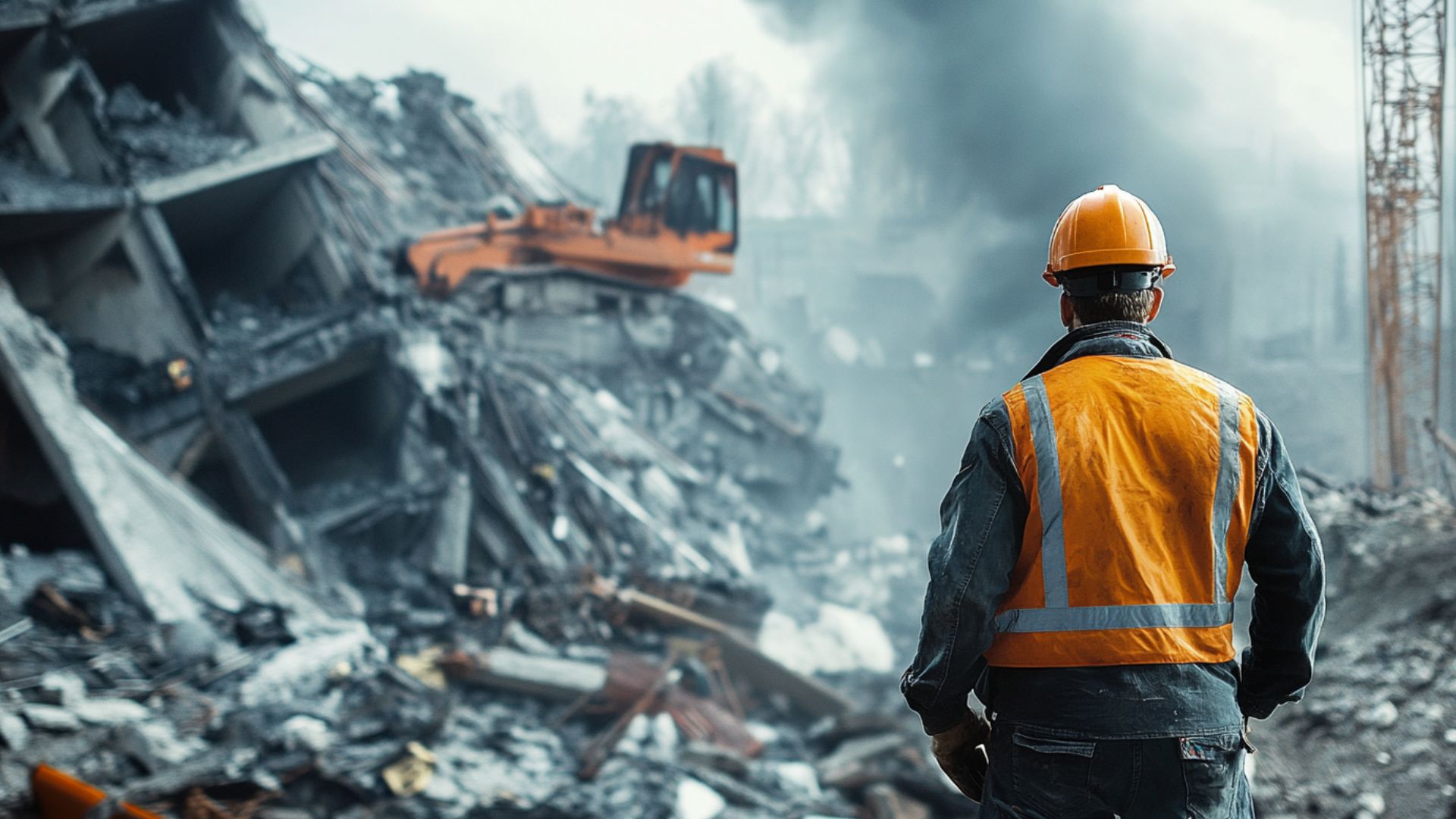
All of these disasters have fundamentally changed the way we build today. Engineering disasters are not just scary stories from the past. They are the foundation on which modern standards of safety and environmental responsibility are built.
In the past, engineers relied more on experience and intuition. Today, every decision is backed up by calculations, modeling, testing, and independent verification. And, most importantly, we now understand that any failed construction project has an impact on the environment, sometimes for decades to come.
It is worth noting that each engineering disaster brought us closer to changing the rules of development. That is why there are fewer mistakes in the 21st century than before:
- Standards have become stricter (which is a good thing). What was normal 20 years ago may be prohibited today. This is especially true for environmental standards.
- Materials have become smarter. Modern materials can withstand extreme loads, resist corrosion from salt water, and adapt to temperature changes.
- Technology has changed everything. In the past, engineers drew designs on paper and hoped for the best. Today, computers can calculate millions of load scenarios, simulate how a building will behave during an earthquake or hurricane, and predict how the coastline will change 50 years after the construction of a protective structure.
- Ecology has become a priority. After Chernobyl and other environmental disasters, it became clear that saving on environmental safety means accumulating problems. Restoring a destroyed ecosystem costs dozens of times more than proper design from the outset.
Cypress Environment & Infrastructure applies all these lessons to real projects. For example, when we restore a coastal area, we don’t just reinforce the shore. We consider how it will affect the local flora and fauna, how water movement will change, and what materials will not harm marine life.
When designing infrastructure, we use computer modeling to predict how the structure will behave in 20, 50, or 100 years. We take into account climate change, sea level rise, and increased hurricane frequency – things that engineers of the past never even considered.
Modern engineers don’t just build – they design systems that can adapt to change. Coastal defenses that work with nature, not against it. Buildings that can withstand earthquakes. Infrastructure that won’t destroy the local ecosystem.
Civil engineering problems of the past have taught us to think decades ahead, consider hundreds of factors, and not cut corners. Every disaster has made the industry a little safer, a little more responsible, a little better.
If you are planning a project related to infrastructure or the environment, it is important to work with those who understand these lessons. Cypress EI specializes in projects where engineering expertise meets environmental responsibility. We know that every decision today affects tomorrow, and we apply all of our modern knowledge to create sustainable solutions.
Contact us to discuss how to properly plan your project, taking into account all factors – from geology and ecology to current regulations and future climate change.