
Getting a site ready for commercial construction isn’t just about breaking ground and putting up walls. There’s a whole layer of work that happens before any of that – studying the land, mapping out where everything goes, planning drainage and utilities, and making sure every decision holds up under the weight of real-world use. Commercial site design ties all those pieces together, and when it’s done right, it sets the entire project up for a smoother build and a longer-lasting result.
A well-designed site considers more than how things look. It’s about how the space actually functions – where vehicles enter and exit, how water drains during a heavy rain, where utilities run, and how people move through the property safely. Skipping or rushing this stage almost always costs more in the long run. Good site design saves money, avoids regulatory headaches, and reduces the chance of expensive fixes later.
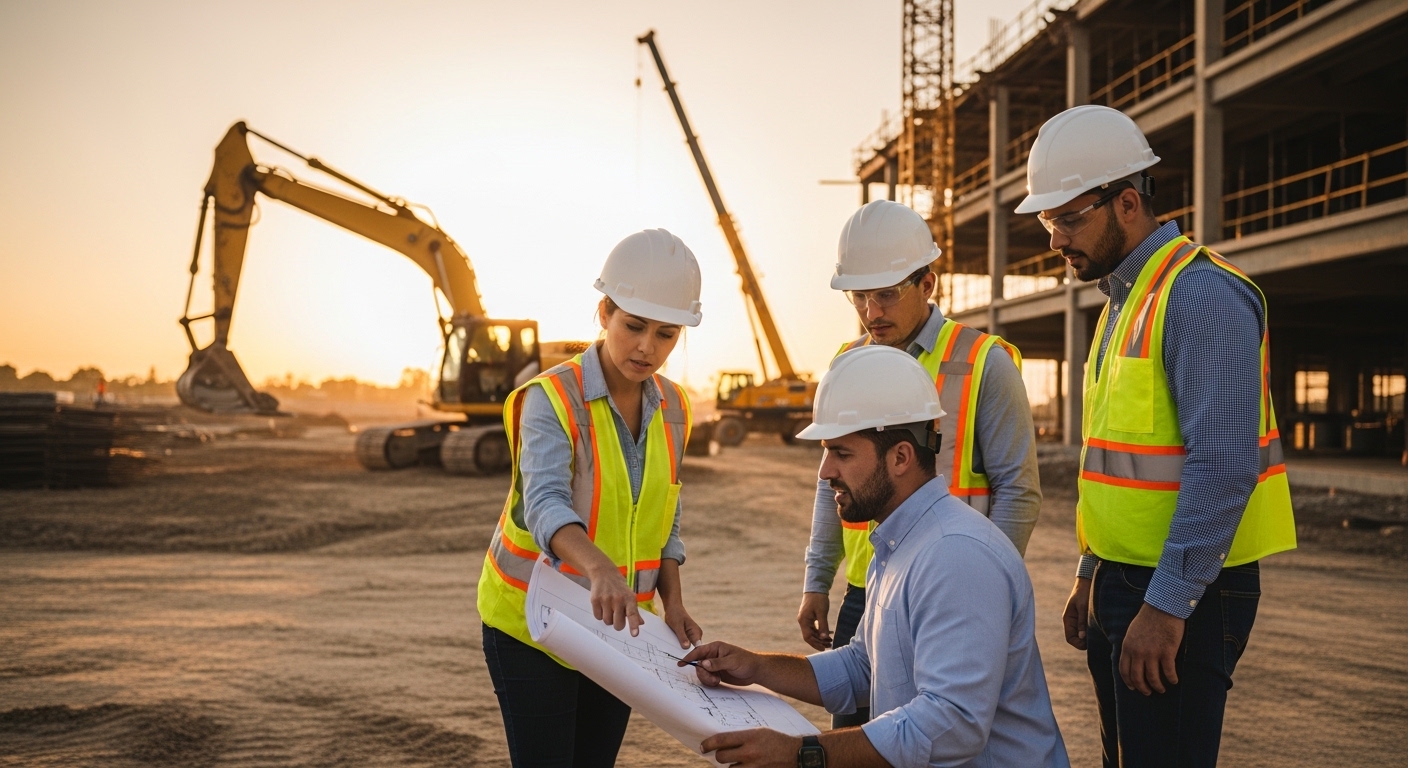
What Is Commercial Development? Core Concepts
Before diving into the details, it helps to be clear about what commercial development is and what it actually involves. At its core, it’s the process of transforming raw or underused land into a functional space intended for business – retail, office, industrial, mixed-use, you name it. That transformation covers everything from the initial site assessment to obtaining permits, designing the infrastructure, and finally building the facility.
A key player in that process is the commercial site developer – the person or firm responsible for coordinating all moving parts. This isn’t just project management in the traditional sense. A good developer keeps the planners, engineers, environmental consultants, and contractors working in the same direction. They know where permit bottlenecks tend to occur, understand local regulatory requirements, and can flag environmental concerns before they become costly delays.
Commercial land development also doesn’t happen in isolation. It has to account for the surrounding environment, nearby existing infrastructure, and long-term land-use goals. That’s exactly why teams like Cypress Environment & Infrastructure get involved early – before the first design drawing is finalized. Our Civil Engineering Design Services are built around getting the engineering foundation right from the start, so projects don’t run into avoidable problems down the road.
Three things every developer should nail down before moving forward:
- Planning. Define what the project is trying to accomplish. What type of facility? What’s the expected footprint? What are the site constraints? Solid answers here shape every decision that follows.
- Permits. You can’t build without them. Commercial land development requires approvals from multiple agencies – local, state, sometimes federal – depending on what’s being built and where. Understanding this process early prevents the kind of delays that throw entire project timelines off.
- Integration. Civil design, architecture, and environmental considerations all need to fit together. When they’re treated separately, gaps appear – and gaps in a commercial project often lead to rework.
Key Principles of Civil Site Design for Commercial Projects
The principles behind good commercial site design don’t change much from project to project, even when the specifics do. Whether it’s a strip mall, a warehouse distribution center, or a medical office complex, the same fundamentals apply.
- Planning. How the site is laid out – where buildings sit, where roads run, where utilities enter – needs to make logical sense. Poor layout creates traffic problems, limits future expansion, and frustrates the people using the space every day.
- Drainage. This one gets overlooked more than it should. An improperly sized or routed drainage system can cause flooding, erosion, and structural damage to paved surfaces and foundations. Getting drainage right during design is far cheaper than fixing it after construction.
- Norms. Every commercial project has to meet building codes and zoning requirements. Designing to those standards from day one simplifies the permitting process and avoids the back-and-forth that can result when plans don’t align with regulators’ expectations.
- Sustainability. Construction site development increasingly involves thinking about long-term environmental impact – not just what’s required by law, but what actually makes the project more durable and cost-effective over time. Energy-efficient infrastructure, permeable surfaces, native landscaping – these aren’t just nice-to-haves anymore. They often reduce operating costs and can improve a property’s value.
Commercial Site Work: Steps and Best Practices
Once the design is locked in, commercial site work begins – and this is where planning either pays off or falls apart. Site work covers everything that happens to the land before vertical construction starts: surveys, clearing, grading, utility installation, and building out access routes.
Here’s how it typically breaks down:
- Research. Before anything gets moved or cleared, a thorough site assessment is essential. Soil testing, topographic surveys, and utility locates tell the team what they’re actually working with. This step catches problems – unstable ground, buried infrastructure, drainage issues – before they become construction-phase surprises.
- Preparation. Clearing vegetation, grading the land, and preparing a stable base takes time but sets the tone for everything above it. Rushing through this stage is one of the most common reasons foundations and paved surfaces fail early.
- Infrastructure. Installing underground utilities – water, sewer, stormwater, electrical conduit – happens during commercial site work, well before the structure goes up. Coordination here matters a lot. Sequencing these installations incorrectly creates conflicts that are expensive to untangle later.
- Integration. Commercial land development isn’t just about the building itself. Parking, pedestrian pathways, landscaping, and exterior lighting are all part of the finished product. These elements affect how the property functions and is perceived by users and neighbors alike.
Tips for Successful Commercial Site Design Projects
Even experienced teams run into trouble on commercial projects. The ones that consistently deliver good results tend to follow a few habits that others don’t.
- Collaboration. A commercial site developer who keeps all parties – engineers, architects, environmental consultants, contractors – communicating openly makes a noticeable difference. Problems surface earlier, decisions get made faster, and fewer things fall through the cracks. At Cypress, our Planning Services are designed around exactly this kind of coordinated, multi-disciplinary approach.
- Analysis. Don’t skip the preliminary studies. Soil conditions, nearby infrastructure capacity, flood risk, and environmental sensitivities – these factors should all be understood before the design gets too far along. A commercial site developer who pushes past this step to save time often ends up losing far more time later.
- Permits. Permit timelines vary widely depending on the jurisdiction and project type. Starting the permitting process early – ideally while design is still being refined – helps keep the overall schedule from stalling at a critical stage. This is something the Cypress team navigates regularly across Florida, Alabama, Mississippi, and Louisiana.
Getting commercial development right requires a combination of technical skill, local knowledge, and practical experience. If you’re in the early stages of a commercial land development project and want a team that handles both engineering and environmental work, Cypress Environment & Infrastructure is a good place to start the conversation.