
Why You Need a Construction Stormwater Permit Consultant
Managing unmanaged runoff across an active build is rarely straightforward. If you disturb an acre or more of soil, strict Clean Water Act requirements kick into gear immediately.
Hiring a qualified construction stormwater permit consultant helps keep your projects moving without regulatory headaches. You secure tailored compliance guidance that prevents unexpected shutdowns from the start.
The Critical Role of a Construction Stormwater Permit Consultant
Your consultant navigates shifting general permit rules and manages liaison duties with regional environmental bodies. They submit your formal Notice of Intent and complete the hydrologic analysis needed before earthwork begins.
Daily civil penalties for site discharge issues run between $10,000 and $60,000 per violation, according to enforcement findings compiled by The Stormwater Training Center. Professional oversight prevents stop-work orders and avoids costly regulatory enforcement early.
Comprehensive Stormwater Pollution Prevention Plan (SWPPP) Services
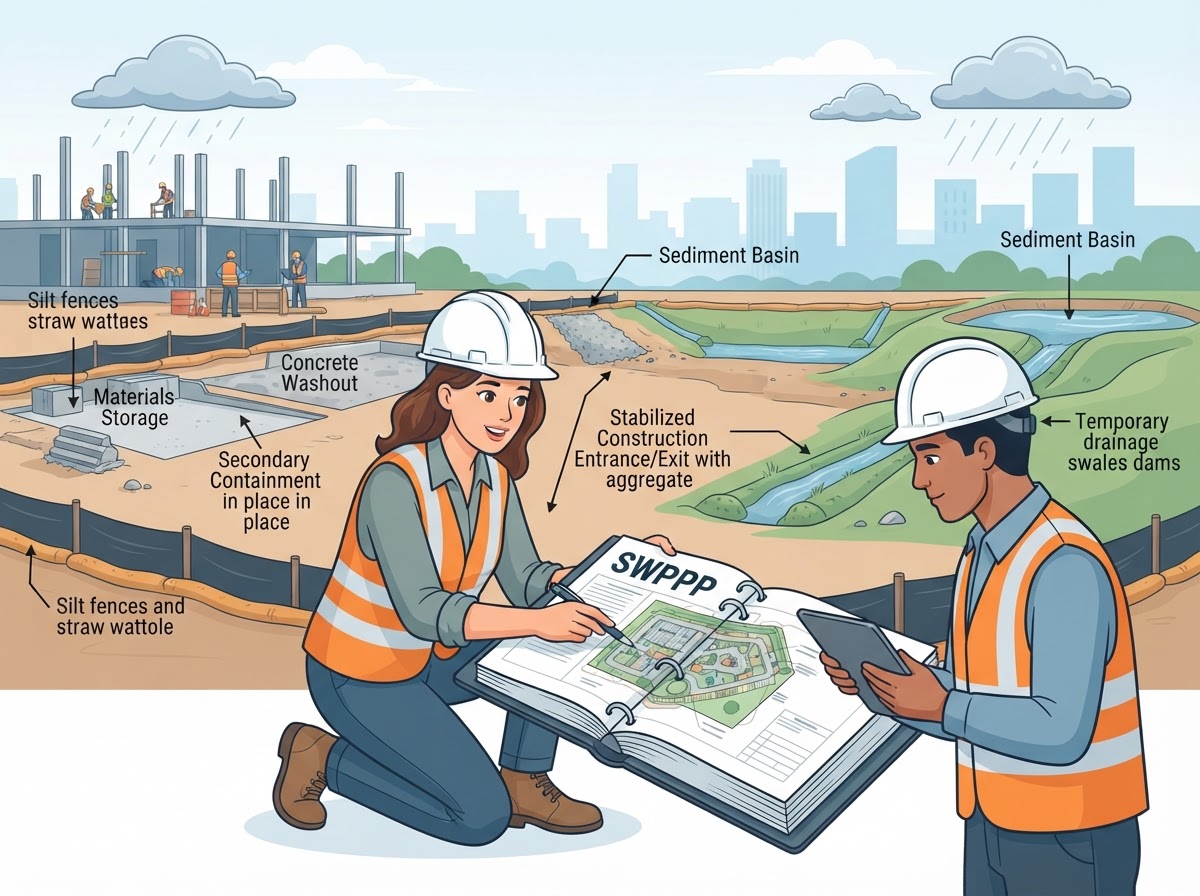
A customized Stormwater Pollution Prevention Plan outlines actionable strategies for sediment control, disturbed ground stabilization, and chemical management. Your consultant tailors these engineering documents to your site’s topography, soils, and total impervious area.
Rules also evolve rapidly. The National Law Review reports that the EPA released a proposed 2027 Construction General Permit introducing focused narrative discharge limits.
Specialists implement organized inspection schedules and post-storm logs so your construction activities stay fully audit-ready throughout every build stage.
Implementing Engineering-Grade Best Management Practices
Effective sediment control requires properly engineered Best Management Practices. Your consultant designs sediment basin dimensions, stabilized exits, and silt fencing suited to your active grading limits.
These technical controls minimize untreated stormwater runoff and ensure sustained MS4 compliance during intense storms. Maintaining stable ground across all phases clears the path for filing a clean Notice of Termination.
Frequently Asked Questions
How do you verify if a construction consultant is properly qualified for stormwater?
Verify whether they hold verified credentials such as a Certified Professional in Erosion and Sediment Control (CPESC) designation or an active civil engineering license. Ask for past project submittals under your state’s general NPDES permit and reviews of their SPCC planning experience. Specialized engineering partners like Cypress bring tested regional experience with complex municipal and industrial operations.
What are the primary operational risks of using an inexperienced construction stormwater consultant?
Using inexperienced providers risks undersized sediment control measures, persistent off-site sediment migration, and immediate project shutdowns. Flawed controls leave developers liable for substantial regulatory enforcement fines.
Under-qualified practitioners often neglect critical site stabilization timelines and post-storm documentation, creating legal exposure that far outweighs any initial savings in advisory fees.